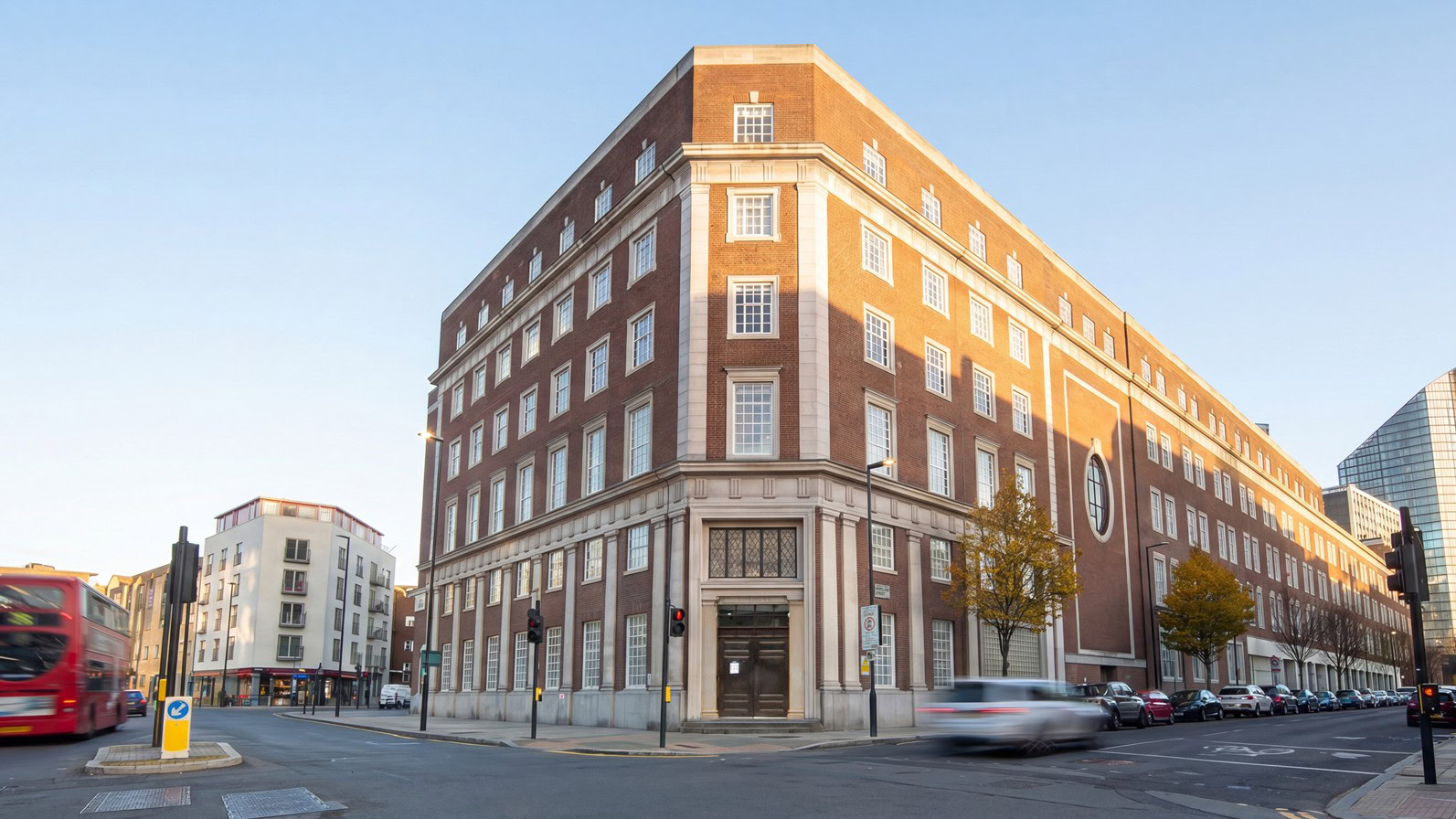
Urban proximity and environmental responsibility aren’t competing priorities. They’re two sides of the same strategy.
The data center industry has a sustainability problem it rarely names. The conversation fixates on how efficiently a facility runs once it is built, while the largest environmental cost is often the act of building it at all. At Stellanor, we start somewhere different: wherever viable infrastructure already exists, transforming it is often the most sustainable path. Every site presents different opportunities, and our approach is to deliver the capacity modern workloads require in the most environmentally responsible way possible.
The brownfield advantage
Viable data center infrastructure already exists across the UK’s urban centers. Instead of breaking ground on undeveloped land, we invest in transforming these existing sites, an approach known as brownfield development, into facilities ready for AI-era workloads.
The logic is simple. A single large new build can generate thousands of tons of CO2 in concrete and steel before a single server is switched on. Transformation avoids almost all of that upfront carbon. It reuses the grid connections, fiber, water, and road access that are already in place, and it extends the productive life of functional buildings rather than feeding the demolish-and-rebuild cycle.
Inside our buildings we are designing and installing high-density power solutions for the most demanding workloads capable of delivering up to 250kW per cabinet. We are delivering energy-efficient cooling, and upgraded connectivity, all running on renewable energy from day one. The result matches or exceeds new construction, without the environmental price tag.